Translation
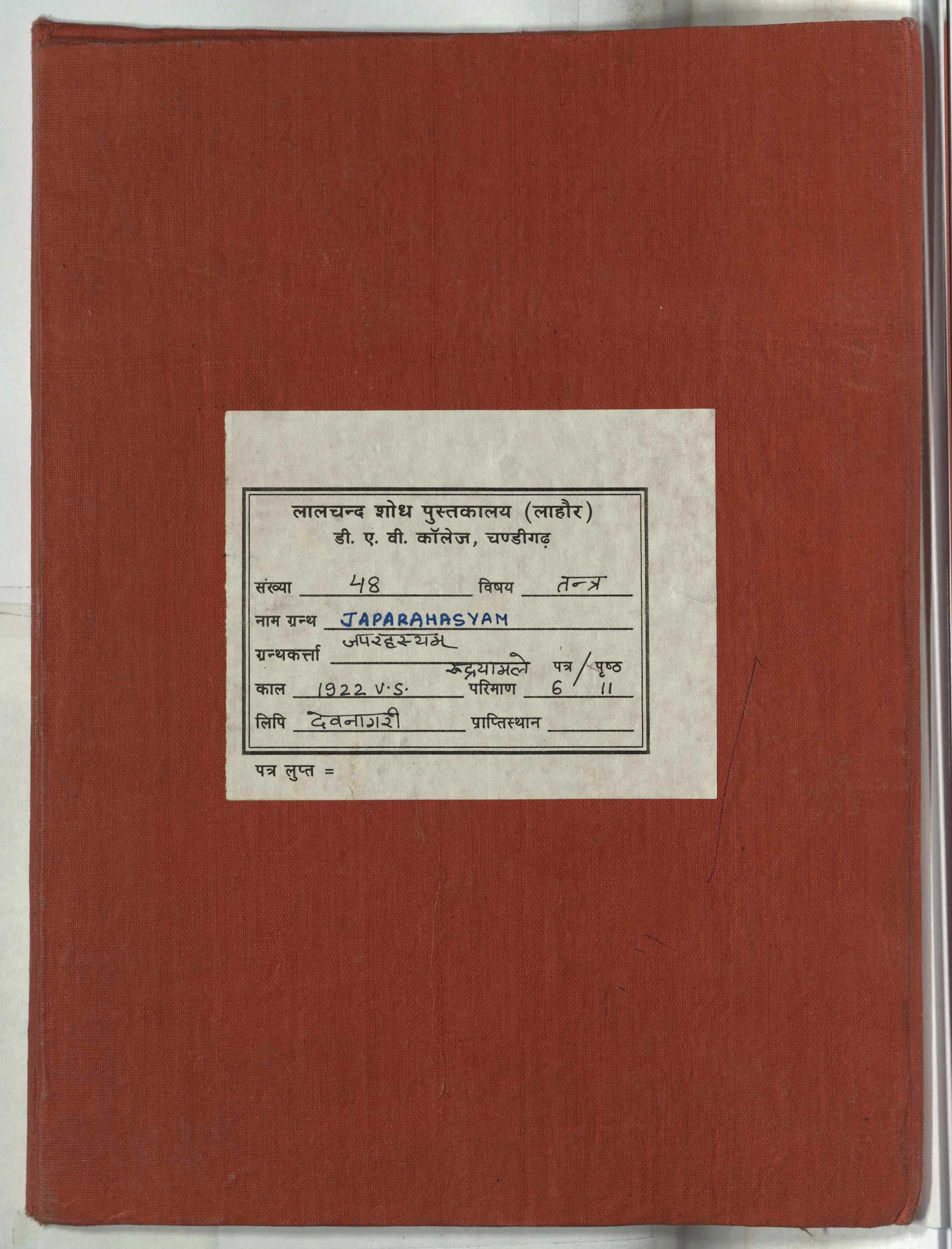
A TEXT ON THE SECRECY OF JAPA
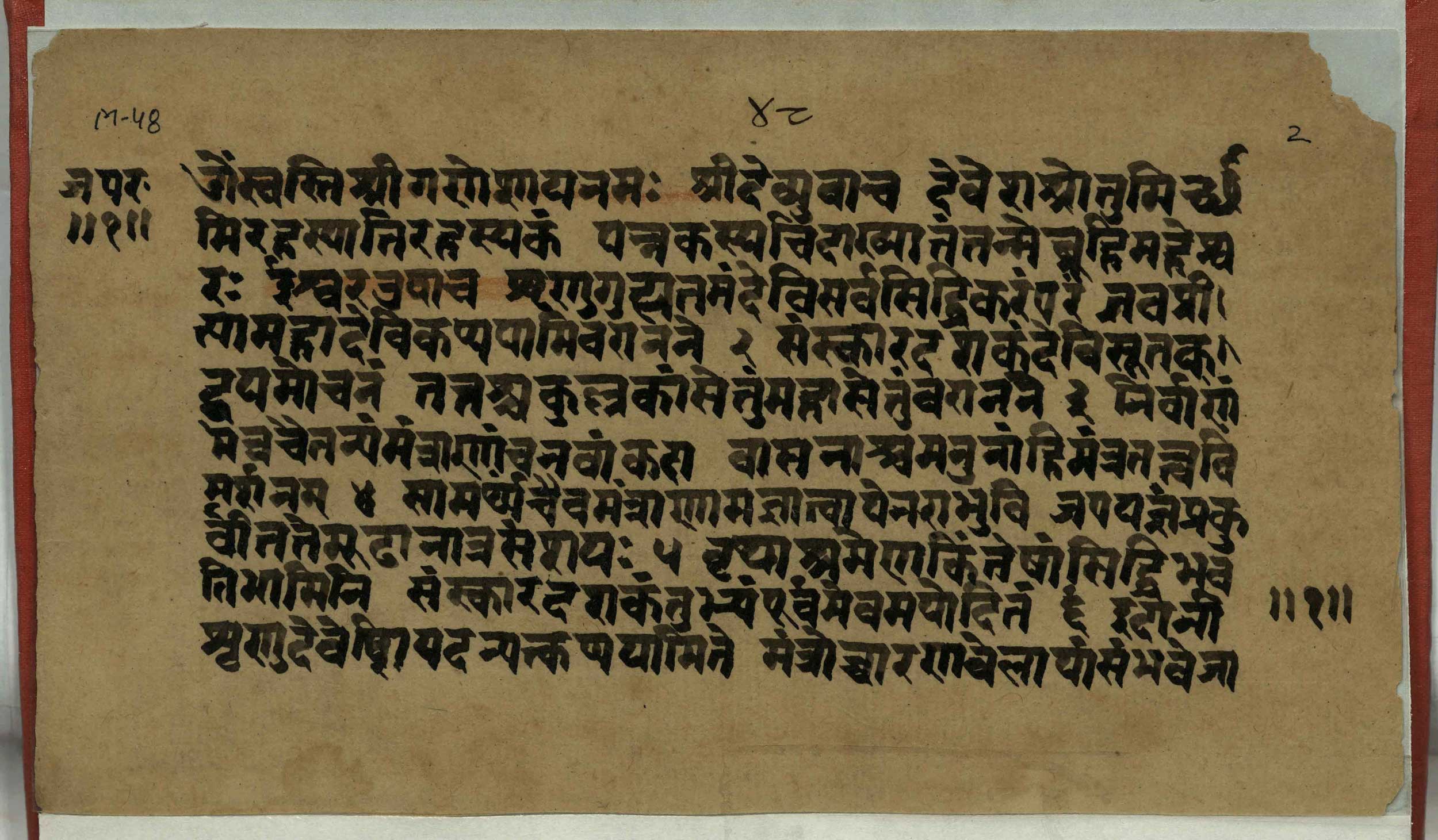
OM SVASTI //ŚRĪ GAṆEŚĀYA NAMAḤ// Śrī Devī Told: O’ Deveśa ! I would like to listen to the secret of secrets that has not been said/stated to anybody else so far. Please tell it to me O’ Maheśvara! (1) Īśara stated. O’ Devi ! Listen to the most secret thing that fulfils all the desires. O’ lovely-faced one! It is due to my love in you, I tell all these to you(2). O’ Devi! There are ten saṁskāras & two types of sūtakas for releasing. Therefore, Let’s speak on the Kullakāsetu which is considered as the Mahāsetu(3). Nirvāṇa here means the understanding of the essentiality of mantras. Therefore, the analysis of mantra is the secret desire/effort of men…(4) Those who, without understanding the capacities/powers of these mantras begin the Japayajña, are the fools and there is no doubt about it(5). O’ Bhāmini ! They cannot have any siddhi (acomplishment) without effort and this thing has been clarified by me before this along with the ten saṁskāras(6). O’ Deveśi ! Please listen the other things I tell you (here) that what are the possible sūtakas at the time of the utterance of the mantras(7).
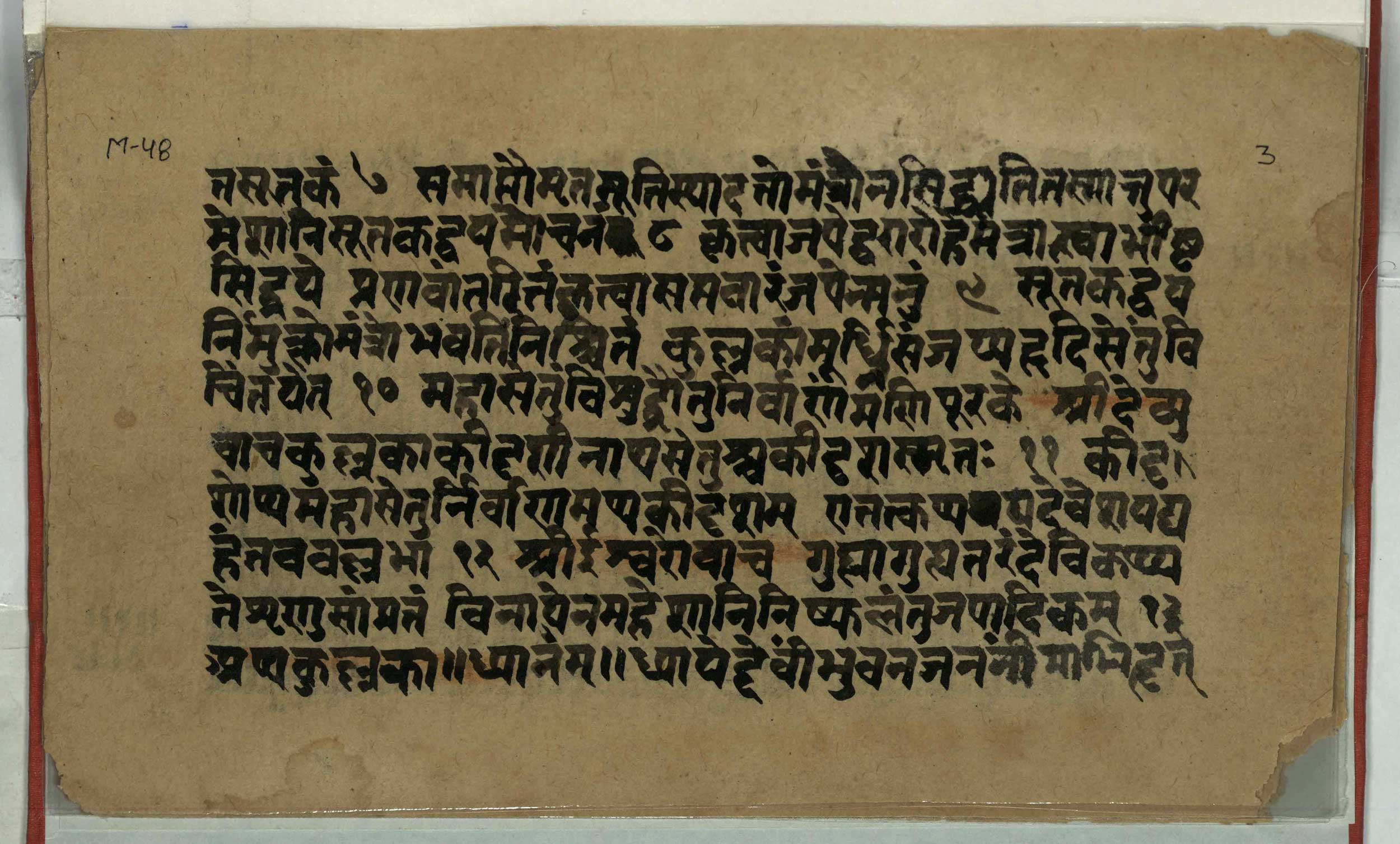
At the end there happens to be a mṛtajūti and in that case there is no siddhi (accomplishment) of mantras and therefore, one must be free from the two sūtakas(8). For the accomplishment of desire, the Varāroha must make a japa of this manu seven times internalising it within the Praṇava(Omkāra)(9). Being free from the two sūtakas the mantra becomes strong. (Therefore) one must utter the kullakā mentally while thinking about the setu in his heart(10). Mahāsetu is to be considered as the nirvāṇa in his Maṇipūra (cakra), the purified one. Śrī Devī Told: O’ the Lord! How is the Kullakā & how is about setu? (11)How is about Mahāsetu and how is the nirvāṇa? Please tell me O’ Deveśa! If you don’t want me to be unhurt(12). Śrī Īśvara Told: You may listen the secret of secrets to be told now, without which, O’ the wife of Shiva, all the activities following japa is useless(13).
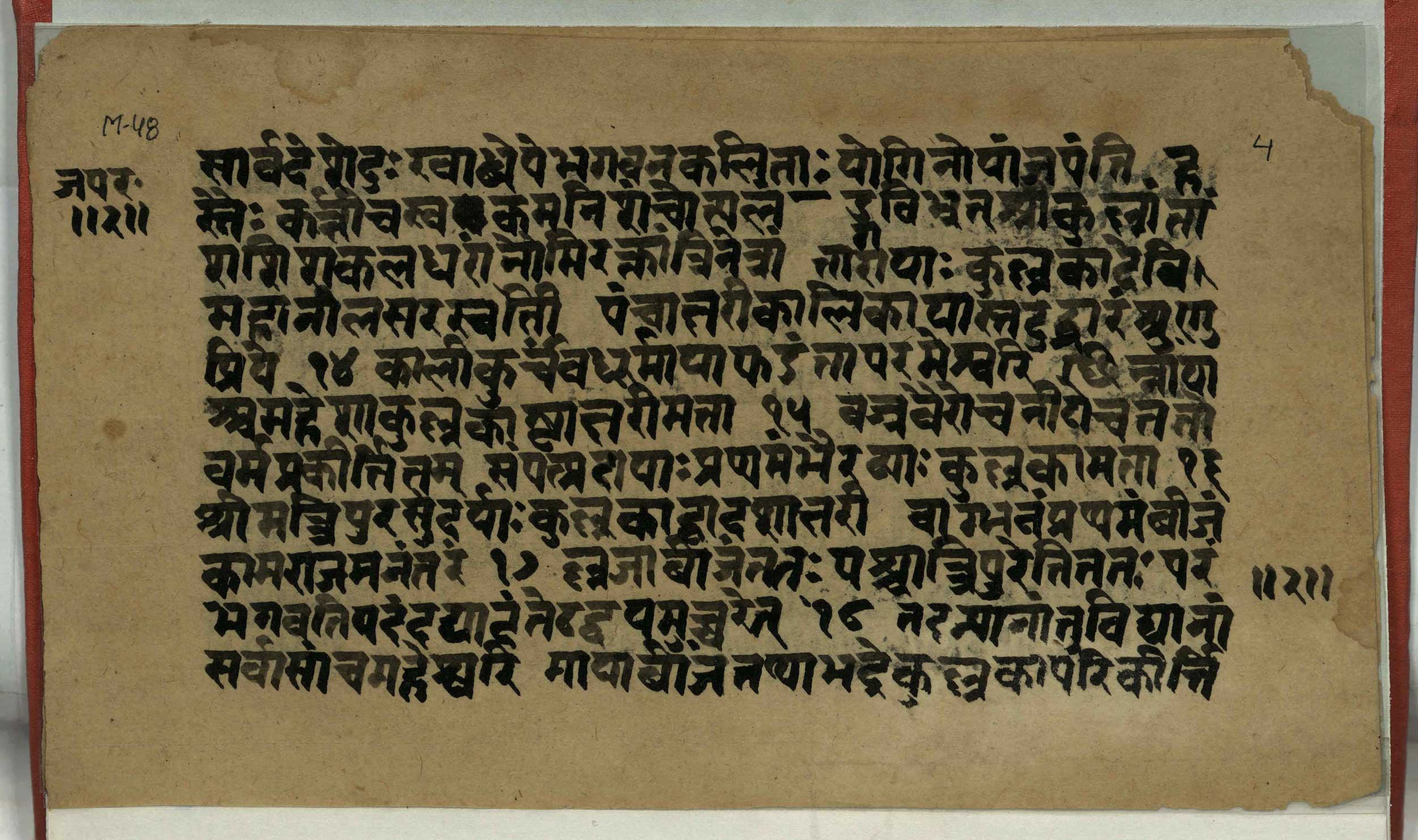
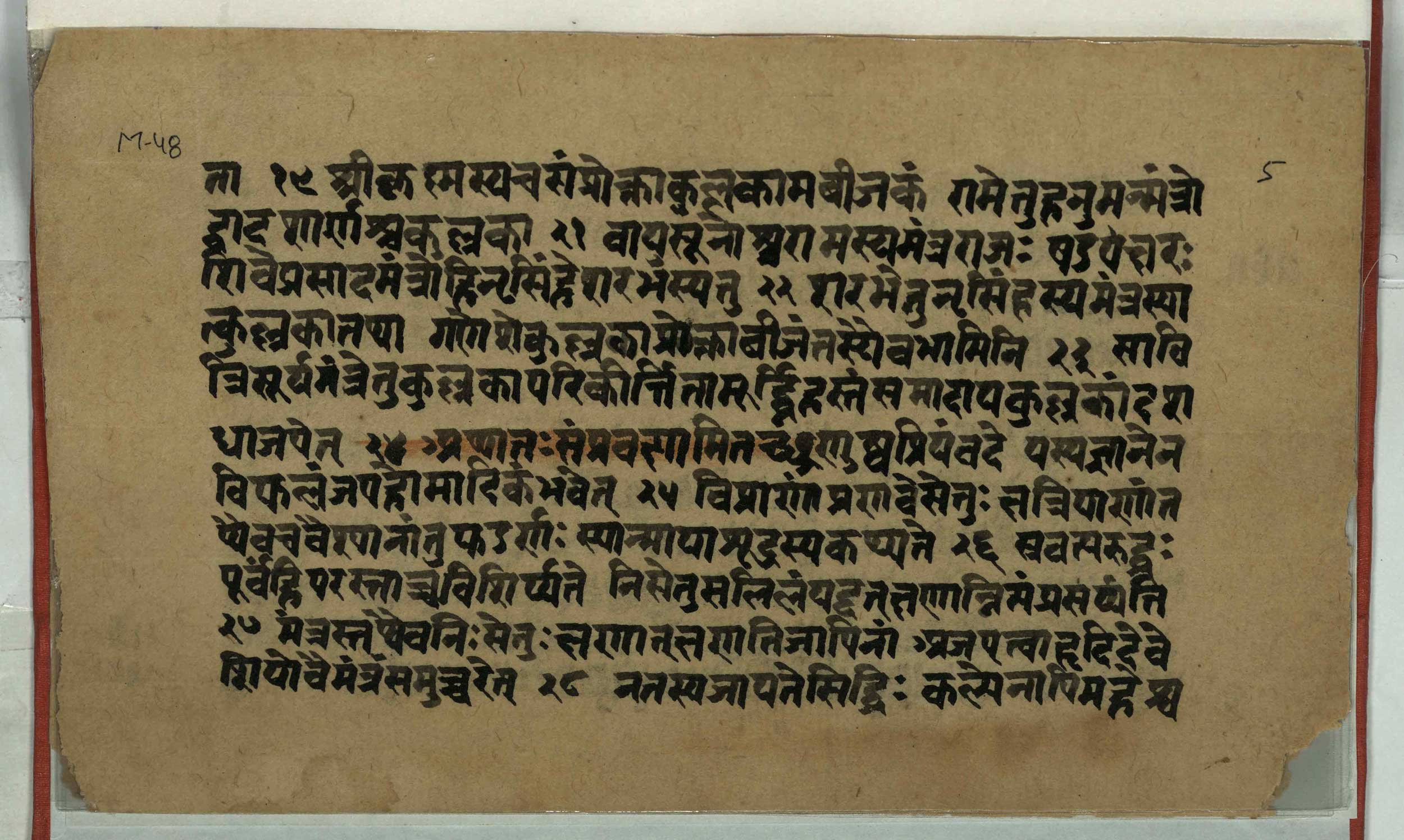
Hence begins Kullakā. Dhyānam(Meditating upon). I am meditating upon the Devī who is the reason behind the creation of this Universe. She is the one who can help overcoming the ocean of sorrow and whom the Yogins meditate upon. She is adorned with a lotus in her hand. I bow down to that Kullukā devī holding a part of moon, the three-eyed one & whose eyes are reddish. O’ beloved! Listen. This Kullakā Devī is from the tradition of Tārā and she is the Mahānīla- sarasvatī. For her, the prescribed mantra is in five letters(pañcākṣarī) belonging to Kālikā(14). While she is in the form of Kālī with gutted hair, a woman called Māyā, the Phaḍantā, the Parameśvarī, the one who is Cchinnā & is also Maheśā is meditated upon with eight letters & known as eight-lettered one(15).The one who is a Vajravairocanī …….She is the fore-front incarnate of Bhairavī known as Kullukā who gives prosperity(16).However, the kullaka of Tripurasundarī is of twelve-lettered one. Here vāgbhavam is the first bīja & kāmarāja comes thereafter(17). Then comes the lajjābīja and tripurā comes thereafter.Those who are at the compationate feet of Bhagavati must utter those two(18). In addition to these, O’ Maheśvarī ! O’ Bhadre! Māyābīja is to be used in all other places.This is about Kullukā(19).
The Kullakā that has been stated by Śrīkr̥ṣṇa is a Kāmabīja and when Kullakā is used in case of Rāma by Hanūmān, known as Hanūmanmantra, it is of twelve letters(20-21). The same mantra is of six letters in case of Vāyusūnu, the form of Hanūmān. It is called mantrarāja there. It is known as prasada in case of Shiva and in case of Nṛsiṁha it is of śarabha*(22). The Kullakā in case of śarabha is a mantra that is used is of Nṛsiṁha but in case of Gaṇeśa, it is of same, O’ the beautiful one! The same is called Bīja(23). In case of Sāvitrisūryamantra it is called kullakā. It is to be uttered ten times there taking it in the head & hand(24). O’ the sweet-spoken one! Please listen. Hence forth, I will speak on the matter dealing with, how without the knowledge of which all the merits of japa, homa etc., become in vain/fruitless(25). It is like a bridge in the Praṇava in case a Brahmin & same is in case of Kṣatriya too. In case of Vaiśyas it is called Phaḍarṇa and in case of Śūdra it is called mātrā(26). At the beginning it flows being uncontrolled but spreads later. Its like the water flow without a bridge catches a momentum from a subtle moment(27). Similarly, mantra without being controlled slowly spreads in the heart of the person who utters it for a longer time & in course of time it is echoed automatically although unuttered verbally(28) .•Śarabha= cub of an elephant or a mythological beast, more powerful than a lion having eight leg known as aṣṭapādī.
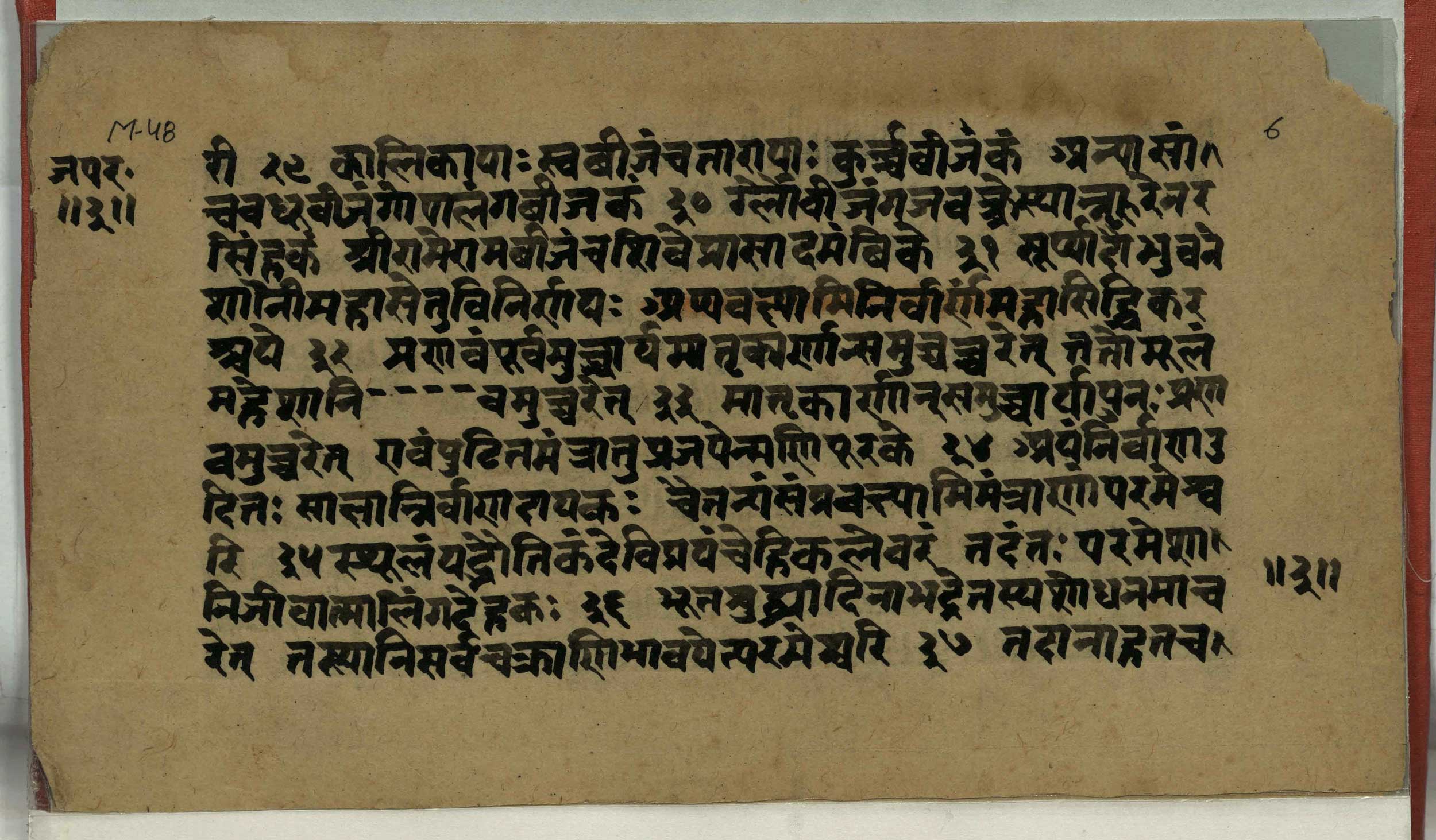
O’ Maheśvari ! No accomplishment will be there for such a person even within the span of a kalpa(29). For Kālikā Svabījam is used and in case of Tārā, Kurcabījakam is used. For others, the Badhūbīja is applied whereas, for Gopāla ‘Ga’bīja is used(30). In case of Gajabaktra the ‘Glaum’ bīja is used & ‘Nr̥’ for Narasiṁhaka. For Śrīrāma, the Bīja applied is Rāmabīja and in case of Shiva ……(31). For Sūrya and others, Bhuvaneśānī is the Mahāsetu, as ascertained. Henceforth, I will speak on Nirvāṇa that is believed as the one which brings the biggest accomplishment(32). One must utter the Praṇava first and then the letters in a Mātr̥kā and then again the beginning, O’ Maheśāni…..to be prounced (33). Having uttered the letters in a mātr̥kā one must utter the Praṇava again. Thus, the engulfed mantras are to be generated in the Maṇipūraka(34). This sort of nirvāṇa is really the real giver of emanicipation/liberation. Now, I will speak of the consciousness of the mantras(35). O’ Devi ! Behind the inner core of this gross body of mundane Universe, there exists the Jivātmā which is in the form of Liṅga(36). O’ Bhadre! (Therefore) One must clean them with the bhūtaśuddhi etc., and thus all the Cakras need to be energized (with this sort of purification), O’ Paramesvari!(37).
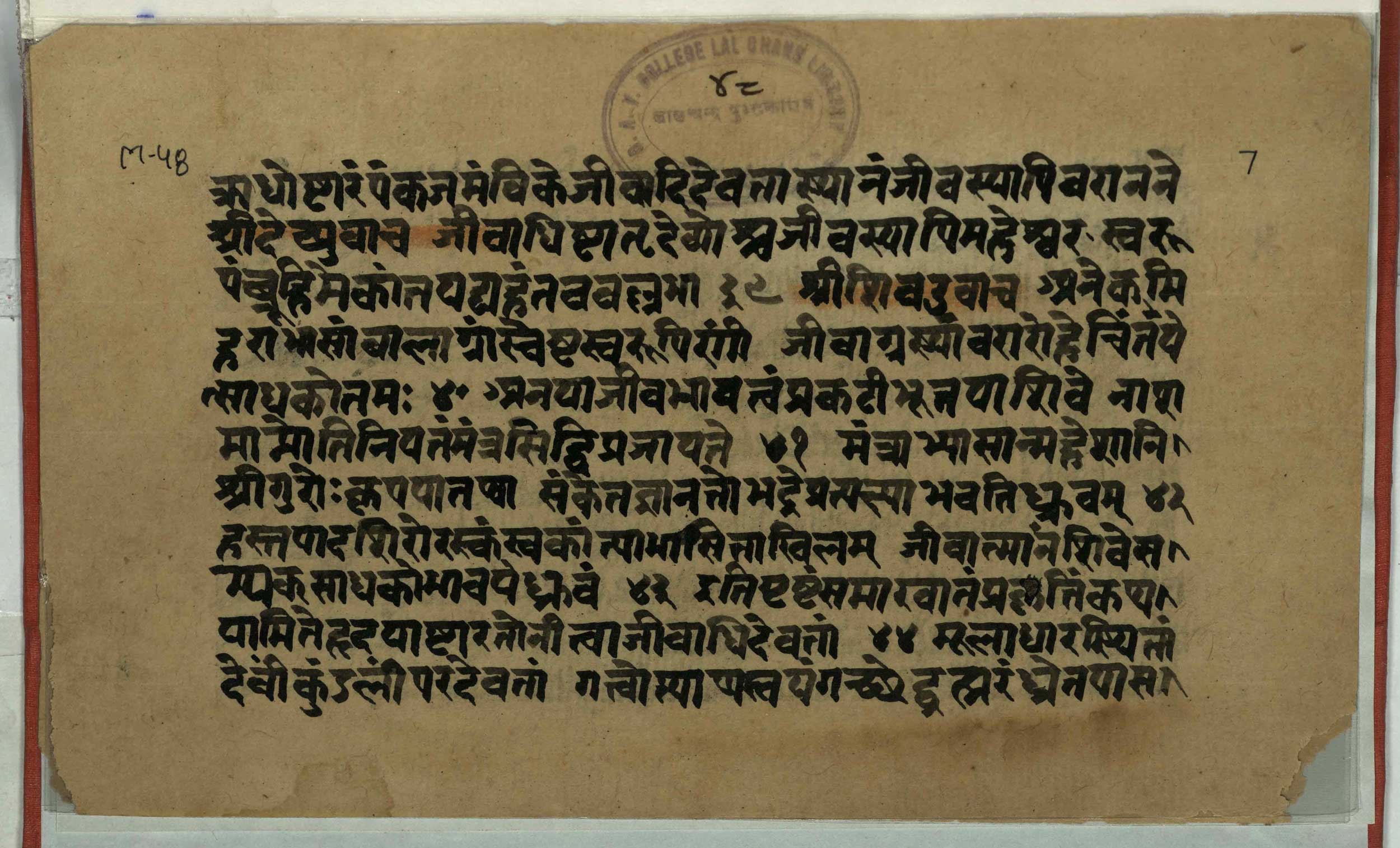
O’ Ambike! Below that Anāhatacakra, exists there a lotus comprising of eighteen radius in every creature. It is the reason which helps to reach the stage of a deity from an ordinary being(38). Śrī Devī Told: O’ Maheśvara! Please tell me alone if you don’t want to hurt me, regarding the female divinities sitting in jiva including their characteristics(39). Śrī Shiva Told: A sādhaka must think on his upliftment by concentrating on his iṣṭasvarupiṇī who is in forefront among the shinning ones(40). Thus, the Jīvātmā is manifested in (a creature) and slowly the other things come to an end as the mantrasiddhi is there (41). O’ Maheśāni! Due to the practice of mantra & due to gurukr̥pā slowly (the sādhaka) tries to understand from the intuitive knowledge, O’ Bhadre! Surely for him everything become perceptible(42). Due to the self-illuminous nature everything i.e hand, leg, shoulder etc., become radiant and surely & very well he can concentrate in the Jīvātmā in him(43). Starting from eighteen radius up to the occupied deity in the jīva all that essence has been explained whats so ever was asked(44).The devī residing in the mūlādhāra………………..(45).
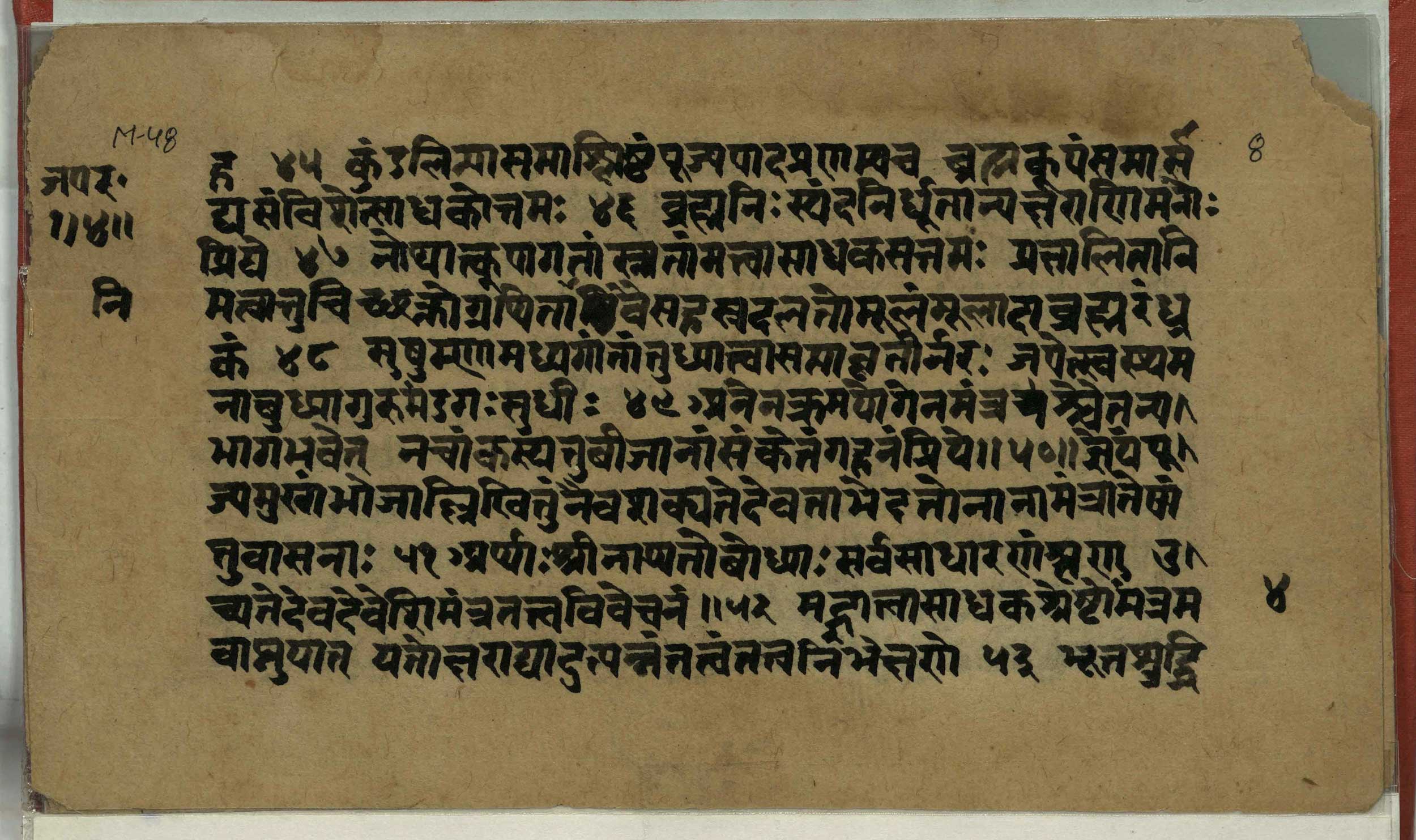
First of all, a sādhaka, par excellence must enter engulfed with the kuṇḍalinī, having bowed down to the adorable guru and after receiving the brahmakūpas (energised) in him(46).O’ beloved! He should have the mind engulfed with the letters in the mind purified with the flow from the devine spirit(47).The sādhaka, par excellence must think himself purified with that lotus who has the thousand petals in it and (he must try to)enter into its root of the mūlākṣa where lays the Brahmarandhra(48). Then the sādhaka must think what lay in between the suṣumnā and having meditated upon there he must remain peacefully free from all sort of problematic circumferential stress being honest gracefully(49). In this way with the systematic effort of conjunction of mind, mantra will reach the state of consciousness without which it is difficult to proceed, O’ beloved(50). It is to be undersood from the experiences of the sādhaka how to proceed about it depending upon their deities(51). The analysis of mantra is as per the general guidelines and the details are to be understood from their follow-up tradition (52). A sādhaka, par excellence must take this general guideline from me here and proceed accordingly taking the mantra. He must follow the mantra the way it reveals to him(53).
O’ beautiful one! It has been stated at the time of bhūtaśuddhi that one must concentrate on the radiant shape and then to focus on the letters. Then one must visualize his desired deity sparkled from that flame. These are the stages during the memorization of mantras. This needs to be thought over in details during the stages of japa, O’ beloved! Thus, I have analysed the essence of the mantras. Offering these mantras to me, O’ Devi! These matramat will reach the stage of their culmination(54-56). O’ Maheśāni ! Henceforth, I will speak of the power of the mantra knowing the way of which they go to the excellent stage of that emanicipation(57). O’ Ambike! First of all, meditating upon the letter who is in the form of the adorned deity, one must become a flame like to enter to the next letter(58).O’ the beautiful one! In the second one(letter) one must imagine/see the image of his desired deity and proceed to the forthcoming letter(59). O’ Avale! In this way the sādhaka, par excellence, must proceed one after another with closer proximity of each other with all awakening, O’ the beautiful one!(60)
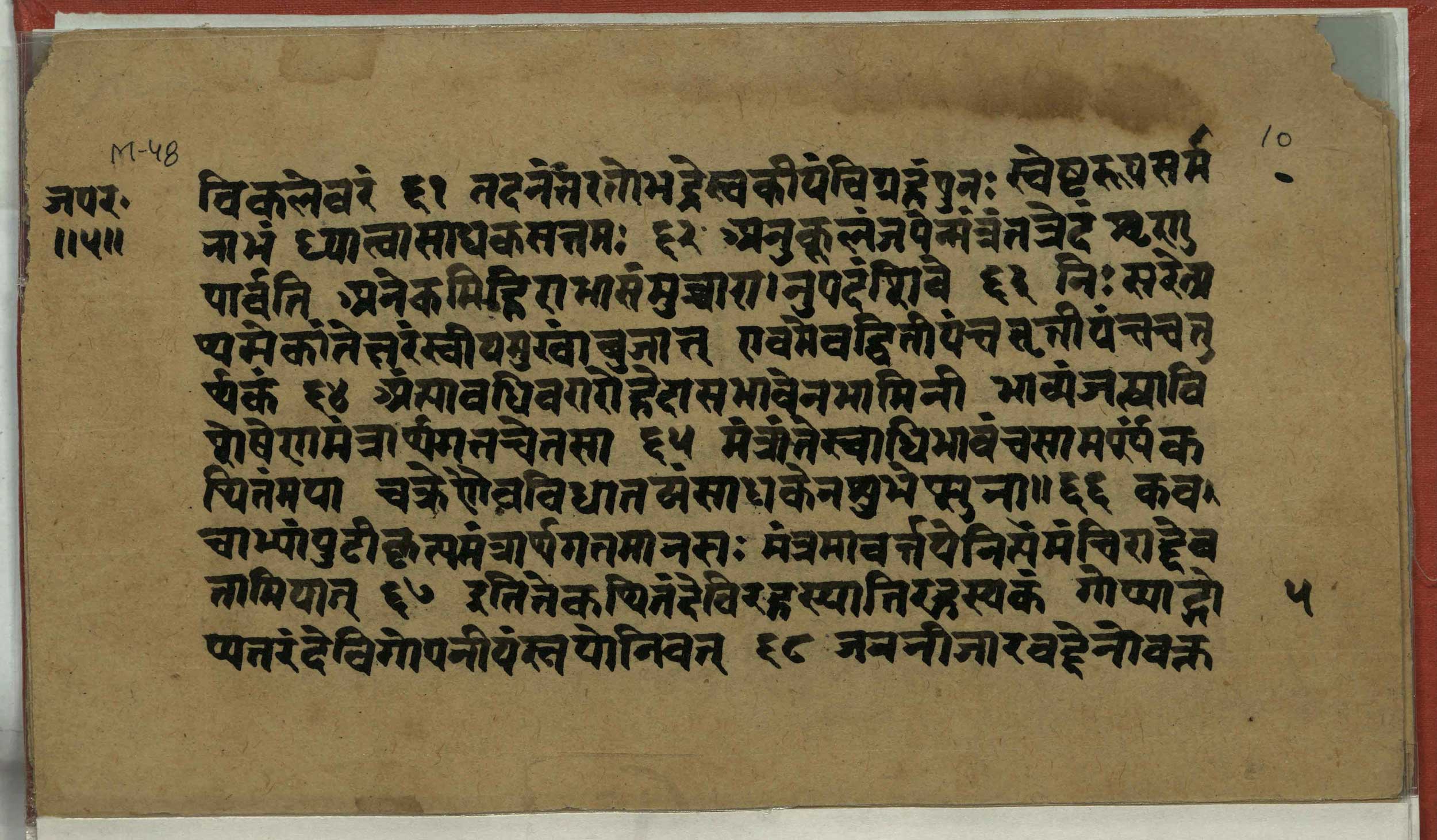
O’ Devi! A sādhaka, having that broad mind set must think of his deity…………….as if he has entered his own body (61). Thereafter, O’ Bhadre! He must think of his own image in equvalence with that of the desired deity’s(image)and concentrate accordingly(62). At that time he must continue the japa with his suitable mantras and then you please listen to it, what should be done there at that time. As he goes on prounciating the letters one after another the rays of sunlight also increase, O’ Shive! (63) At the beginning a perishable letter may come out from his mukhāmbuja(lotus like face) and also for the second, third & fourth & so on up to the end but he has to continue till the end with the attitude of a servant being totally involved/engrossed in the mantrārtha(meaning of the mantra)(64-65). At the end, the sādhaka gets control over his own self and ability over the situation. However, the one who wants his own welfare should try to continue the same has to repeat this exercise as a cycle(66).The one whose mind is engrossed in the mantrārtha, regularly repeats the mantras engulfed with kavaca, reaches shortly the stage of that deity(67). O’ Devi ! Thus, I have stated the matter that is the secret of secrets and the hidden of all hiddens, like that of one’s own private part(68).
As one does not disclose the characterlessness, if any, of his mother, similarly, by greediness or being passionate one should not disclose it to the disciple of others (69). While teaching it to the sudent of one’s own, if he is found to be a scoundrel, is to be briefed in short. Teaching it to an undue fellow leads the person to ditch/downfall, O’ Maheśāni !(70).O’ Devi ! As salt dissolves in water in the same manner when the mind of a disciple is found at a position then that can be considered as a like-minded one with the guru and then only all these matters can be spoken to him and never otherwise, even after crores of kalpas, O’ Maheśvari!(71-72).(Maheśvarī Uvāca/Maheśvarī Told). O’ Deveśa! I am beholden now and the infatuation is now over. Thus, ends Japarahasyam in the dialogue between Hara & Gaurī as a part of Rudrayamala Tantra / Saṁvat 1922. Phalguna Śukla Dināṅka 14 Sauryavāsare Śubham//